
This research proposal guide walks you through the essential steps to prepare a strong document for ethics approval or funding. Learn the difference between a proposal and a protocol, see what to include, and access tools to streamline your academic project planning.
The PICOT Framework: Your Blueprint for Clinical and Quantitative Questions
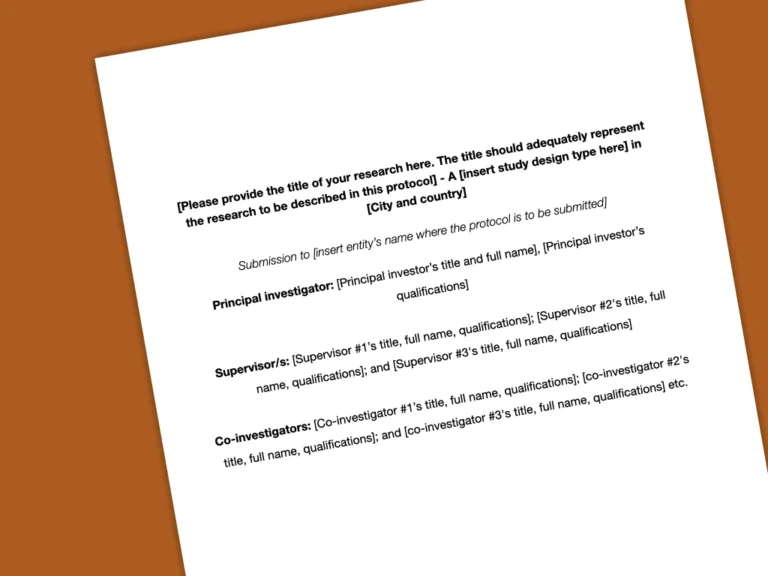
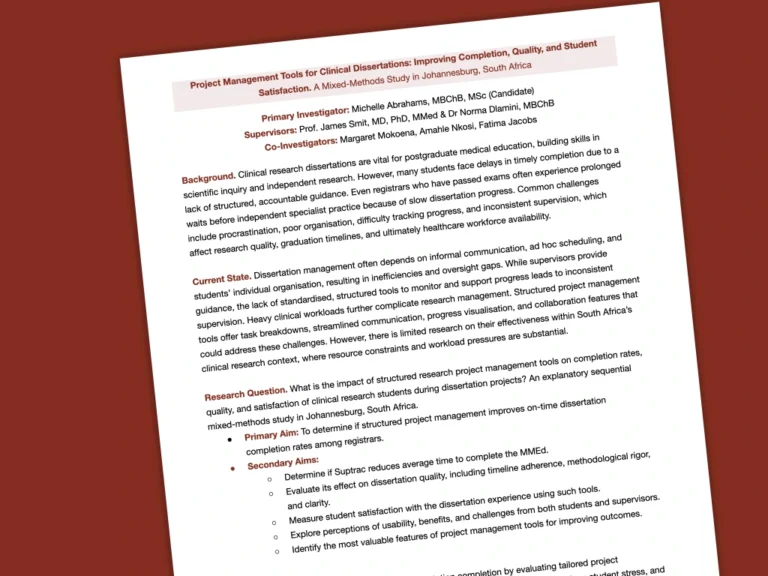
If you’re starting an academic project, one of your first major tasks is preparing a research proposal (sometimes called a protocol). This document is required for ethics approval and, in some cases, for funding or departmental approval.
- Population: Who are you studying? (e.g., “adult patients with hypertension”)
- Intervention: What are you doing or exposing them to? (e.g., “once-daily amlodipine”)
- Comparison: What are you comparing it against? (e.g., “twice-daily nifedipine”)
- Outcome: What result are you looking for? (e.g., “better blood pressure control”)
- Timeframe: Over what duration will the study take place? (e.g., “over 3 months”)
Appraising Your Question: The FINERMAPS Framework
Once you’ve drafted your research question, it’s crucial to critically appraise it to ensure it’s not just answerable, but also worth answering. This is where the FINERMAPS framework comes in. FINERMAPS helps you evaluate your question against key criteria:
- Feasibility: Can you realistically conduct this research given your resources and time?
- Interest: Are you, and potentially others, genuinely interested in this question?
- Novelty: Does your question offer new insights or confirm existing knowledge in a new context?
- Ethical viability: Is your research question ethically sound and does it respect participants’ rights?
- Relevance: Is your question significant to your field and potentially to policy or practice?
- Manageability: Is the scope of your question appropriate for a single study?
- Appropriateness: Is the question suitable for the methods you plan to use?
- Potential value: What impact could your research have?
- Systematic formulation: Is the question clearly and logically structured?
FINERMAPS helps you avoid pitfalls, such as pursuing a question that is scientifically sound but ethically problematic, or feasible but lacks novelty or impact. It encourages a broad consideration of your research’s value and implications.
Beyond Frameworks: Additional Considerations for a Strong Question
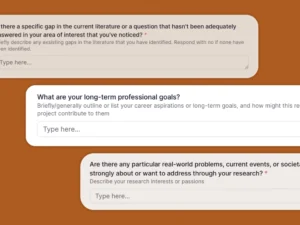
While frameworks like PICOT and FINERMAPS are excellent starting points for structuring and appraising research questions, truly strong questions often emerge from deeper considerations. It’s crucial to address literature gaps, thoroughly exploring existing research to uncover what remains unknown or requires further investigation.
Strive for specificity and clarity, ensuring your question avoids vague terms and leaves no room for misinterpretation. You’ll also need to balance scope, aiming for a question that is ambitious enough to be impactful but practical enough to be manageable. Don’t forget contextual relevance, especially in applied fields; consider how social, economic, or cultural factors might influence the research. Ultimately, a compelling question should ignite your intellectual curiosity and passion, making the long research journey more engaging. Finally, a strong question will possess resonance and impact, contributing valuable knowledge that can inform policy, practice, or future inquiry within the broader scientific community.
If you would like to test your research question try using the Research Question Validation Tool.
Important Disclaimer: Please note, this content is provided purely for educational purposes. The use of this information is entirely at your own risk. It is a guide, not a definitive pronouncement. For conclusiveness, it’s always best to use your own professional judgment or consult with relevant experts. A Large Language Model was used to generate this content. AI was used to optimise blog drafts for readability and SEO.